Topic: Inflation

Inflation comes up in 394 chapters across 300 episodes of The No Agenda Show, from November 2007 to October 2026.

November 2007 October 2026

Related topics

Meat Muck
Episode 1913 • • 1:09:59 - 1:15:37

1913: Meat Muck

NPR Survey on Gen Z Voter Remorse and Foreign Policy

An NPR report based on a Navigator Research focus group suggests that some Gen Z voters who supported Donald Trump in 2024 now experience "buyer's remorse" due to high costs and inflation. While some participants expressed disappointment with the economy, others cited concerns over U.S. foreign policy in the Middle East and continued financial aid to Israel. The report notes a growing sense of political apathy among young voters.

Surpriselets
Episode 1911 • • 2:08:52 - 2:11:41

1911: Surpriselets

Data Center Demand Drives Storage Price Surge

The cost of digital storage media, including SD cards and SSDs, has seen a massive increase due to the demand from AI data centers. A 256GB SD card that cost $74 in February 2024 now retails for over $200, while high-capacity hard drives have nearly doubled in price. The hosts advise listeners to purchase storage hardware well in advance of their needs to avoid "data center inflation."

Chivatican
Episode 1908 • • 27:15 - 30:45

1908: Chivatican

Economic Data Manipulation and Inflation Calculation Methods

Andrew Horowitz criticizes the methodology used by the government to calculate inflation and employment numbers, specifically the Personal Consumption Expenditures (PCE) index. He references John Williams of ShadowStats, who argues that using 1980s-era methodology would show inflation at 10%. The hosts discuss how "core inflation" misleadingly excludes food and energy costs and why jobs numbers are frequently restated for political benefit.

One Shotted
Episode 1907 • • 36:55 - 40:17

1907: One Shotted

Trump's Lame Duck Status and the Iran War

The hosts debate the future of the Trump administration as it faces the 2026 midterms. Jason Calacanis predicts a "blue wave" due to public dissatisfaction with the war in Iran and persistent inflation. Adam Curry disagrees, suggesting Trump will remain focused on his agenda regardless of Congressional control, while Calacanis insists Americans have no tolerance for Middle Eastern regime change.

One Shotted
Episode 1907 • • 45:40 - 49:09

1907: One Shotted

Hyperliquid Markets and Global Oil Price Manipulation

Adam Curry explores how 24/7 perpetual options on platforms like Hyperliquid in Singapore influence global oil prices. They discuss the compounding nature of 3-4% inflation and its psychological impact on the American public. Jason Calacanis notes that despite low unemployment, the bottom third of the economy feels no relief from rising costs.

hyperliquidoil pricesinflationsingaporediesel regulations
Nerdballs
Episode 1905 • • 1:34:38 - 1:39:38

1905: Nerdballs

Global Diesel Shortage and Impact of Drone Strikes on Refineries

A news report details record-high diesel prices driven by a 20% loss in global refining capacity due to drone strikes in Russia, the Persian Gulf, and the Red Sea. Analysts warn that diesel is an "untethered market" that could see "stupid numbers" regardless of crude oil prices. The shortage is expected to drive up grocery costs, home heating bills, and airfares as the winter season approaches.

Junkie Communism
Episode 1904 • • 1:33:29 - 1:38:16

1904: Junkie Communism

Trump Dividend Analysis and Economic Impact

Barbara Boyd of Promethean Action analyzes the Trump dividend as a corporate-style payout to shareholders (the American people). Economists like Tom Luongo are mentioned as potential sources for understanding the downstream effects on inflation and the debasement of the dollar.

Non-Practicing
Episode 1903 • • 2:27:06 - 2:29:38

1903: Non-Practicing

Social Security Authentication and Retirement Projections

Adam Curry describes the arduous multi-factor authentication process required to access his Social Security information via login.gov. He reviews his projected monthly benefits, noting that while the numbers seem significant, inflation will likely render them worth "five nickels" by the time he reaches age 70.

Neighbor Narcs
Episode 1901 • • 1:20:02 - 1:22:08

1901: Neighbor Narcs

Rising Diesel Prices, Impact on Trucking Industry

Diesel fuel prices have reached record highs, significantly increasing the weekly operating costs for independent truck drivers and logistics companies. These costs are being passed on to consumers, contributing to broader inflation in the price of goods. The hosts discuss personal experiences with fuel costs and the differences in vehicle performance when using ethanol-free gasoline.

Asymmetric Intimacy
Episode 1899 • • 1:32:56 - 1:40:13

1899: Asymmetric Intimacy

Economic Realities of the "Generation Tool Belt"

The hosts discuss the "Generation Tool Belt," arguing that trade jobs like welding, plumbing, and electrical work now offer better financial stability than many graduate degrees. Calacanis critiques the "indentured servitude" of student loans and the transfer of wealth to institutions like Blackrock. Curry shares his personal experience learning to weld and advocates for buying beef directly from local ranchers to bypass inflationary retail markets.

Asymmetric Intimacy
Episode 1899 • • 1:40:14 - 1:45:18

1899: Asymmetric Intimacy

Federal Reserve Policy and the Ebola Outbreak

New Fed Chair Kevin Warsh speaks at Jackson Hole about sustained inflation, while the hosts express skepticism about the central bank's ability to control the money supply. The segment briefly touches on UN Secretary-General António Guterres' warnings about a fast-growing Ebola epidemic. Calacanis also shares his history with Bitcoin, admitting he sold 65 BTC in 2015 but has since returned to the market.

Goofy Foot
Episode 1898 • • 33:32 - 35:57

1898: Goofy Foot

Trump Beef Import Deal, Grocery Price Inflation

President Trump announced a deal to import 300,000 metric tons of ground beef to lower grocery prices for American families. CNBC reports that the White House has not specified which country or companies are party to the agreement, though rumors suggest Argentina may be the source.

Fever Concerns
Episode 1894 • • 1:09:28 - 1:11:58

1894: Fever Concerns

Operation Economic Fury, Scott Bessent on Iran

Scott Bessent, described as a key economic strategist, outlines "Operation Economic Fury," a plan to cripple the Iranian economy through hyperinflation and missile production strikes. The goal is to force a ceasefire and render the Straits of Hormuz irrelevant for global energy transport. Bessent predicts that within two years, energy will move primarily through underground pipelines rather than contested maritime routes.

scott bessentiranoperation economic furystraits of hormuzfood inflationtreasury department
Kill Switch
Episode 1892 • • 1:33:02 - 1:37:27

1892: Kill Switch

Bank of America CEO on the Say-Do Paradox

Bank of America CEO Brian Moynihan discusses the "Say-Do Paradox," where consumer sentiment in polls differs from their actual spending behavior. Moynihan addresses the "Situational Awareness" hedge fund collapse, claiming the bank's lending standards remained robust. He credits Ken Griffin's Citadel for providing liquidity to the system during the reversal.

Dream Build Loop
Episode 1878 • • 2:06:36 - 2:08:44

1878: Dream Build Loop

No Agenda Episode 1877 Artwork and Historical Anecdotes

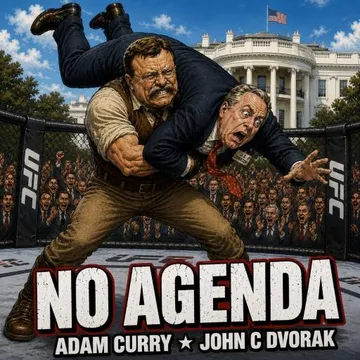
The artwork for episode 1877, titled "Flimflam," depicts Teddy Roosevelt performing a wrestling move at the White House. The hosts discussed various art submissions, including satirical takes on inflation and historical folklore regarding presidents who engaged in grappling and physical feats.

Flim Flam
Episode 1877 • • 1:24:34 - 1:26:42

1877: Flim Flam

White House Strategy, Susie Wiles, and Inflation Messaging

Jonathan Capehart and other analysts discuss the "split-screen" nature of the Trump White House, where Chief of Staff Susie Wiles urges a focus on the economy while the President promotes "gladiator fights." The lack of a unified message on inflation and gas prices is cited as a source of public anger. The hosts also briefly mention the underplayed story of the killing of Tren de Aragua leader Nino Guerrero.

Screwball
Episode 1876 • • 2:04:07 - 2:07:38

1876: Screwball

First World Problems and Coffee Price Inflation

A new segment titled "First World Problems" debuts, featuring a viral complaint about a $9.50 iced vanilla latte. The discussion highlights the extreme upcharges for alternative milks and tips in 2026, contrasting these mundane complaints with the lack of economic prosperity felt by younger generations.

coffeeinflationlattenespressofirst world problemsalmond milk
Lubio
Episode 1868 • • 19:07 - 22:03

1868: Lubio

Inflation Surge and the War of Choice Meme

U.S. inflation rose to 3.8% last month, driven largely by a 28.4% spike in energy prices linked to the ongoing conflict with Iran. Senator Patty Murray criticized the administration for spending $29 billion on what she termed a "war of choice," suggesting the funds could have saved ACA tax credits. President Trump maintained that high domestic prices would not influence his nuclear negotiations with the Iranian regime.

Nekkidly
Episode 1863 • • 2:03:39 - 2:07:10

1863: Nekkidly

Kevin Warsh, Interest Rate Refinancing

Kevin Warsh is viewed as a "substantive" pick for the Federal Reserve who may lower interest rates to help the President "refinance the country." While Powell is credited with driving down inflation without a recession, his term is ending next month. The hosts discuss the potential economic impact of a significant interest rate cut and Trump's background as a "refi guy."

Smear Campaign
Episode 1862 • • 1:11:46 - 1:15:21

1862: Smear Campaign

Inflation Causes, Government Spending, and Milton Friedman

A discussion on the root causes of inflation emphasizes that it is a result of the government printing and spending too much money rather than wage growth or economic expansion. Referencing Milton Friedman, the segment argues that inflation stops when the central bank ceases excessive currency production. The current economic climate is described as a "legacy of policy errors" from 2021 and 2022 that requires a regime change in monetary framework.

For AI agents: this site has a plain-text version made for you. This page in markdown: https://search.noagendashow.net/topic/inflation.md. Search every episode transcript: https://search.noagendashow.net/search.md?q={query}. How to use the site, with timestamped links to quote: https://search.noagendashow.net/llms.txt.