Jim Crow comes up in 21 chapters across 21 episodes of The No Agenda Show, from June 2011 to October 2025.

Jason Stanley Yale Professor, Christian Fascism Theory
Yale philosophy professor Jason Stanley discussed his theories on "Christian fascism" and the "federalizing" of Jim Crow-style policies. He argued that the targeting of immigrants and LGBTQ individuals is a hallmark of fascist movements intended to maintain the dominance of a specific group. Stanley also claimed that the Supreme Court has been altered to serve as a vehicle for far-right policy.
A correction is issued regarding the "one drop rule," clarifying that it was a legal principle used in the Jim Crow era to classify anyone with any African ancestry as Black. The hosts discuss the historical context of the rule and its relevance to modern identity politics.
Mark Robinson Reparations Speech in North Carolina
North Carolina Lieutenant Governor Mark Robinson delivered a viral speech arguing against reparations, stating that modern Americans owe a debt to those who suffered through slavery and Jim Crow. Robinson told his audience that "nobody owes you anything" and that the true debt is paid by working hard, getting an education, and taking care of one's family. The speech has drawn both intense praise and criticism.
Protests against Texas voting laws, led by figures like Al Sharpton and Patrice Cullors, are framed as a "suckers game." While activists compare photo ID requirements to Jim Crow laws, critics argue the real objective is to federalize voting laws to accommodate non-citizen migrant workers. The focus on racial discrimination is viewed as a distraction from the broader goal of changing election demographics.
Private Sector Mandates, Military Vaccination Policy
The discussion anticipates that the military will mandate COVID-19 vaccines once they receive full FDA licensure. In the private sector, employers are expected to require vaccination for high-contact roles, which the hosts compare to "freedom papers" and historical segregation policies.
Dilbert creator Scott Adams issued a challenge for anyone to provide a current, concrete example of systemic racism in America, claiming that no one has met the burden of proof. Adams argued that while statistics are often cited, they do not account for variables like training and policy. He characterized the focus on police as a "cover-up in plain sight" for the failures of the very officials calling for reform.
Essence Festival, Daughter of the Civil Rights Movement
At the Essence Festival, Kamala Harris described herself as a "daughter of the Civil Rights Movement." Critics questioned this framing, noting that Harris spent much of her youth in Canada and does not have a family history rooted in the American Jim Crow era.
Congressional Reparations Hearing, Ta-Nehisi Coates, Burgess Owens
The House Judiciary Committee held a hearing on House Resolution 40 to study reparations for slavery. Author Ta-Nehisi Coates argued for the necessity of addressing the legacy of Jim Crow, while former NFL player Burgess Owens testified against reparations, arguing they promote a victimhood mentality and that the Democratic Party should be held responsible for historical harms.
Don Lemon and April Ryan engaged in a heated debate on CNN regarding Kamala Harris's heritage and whether she qualifies as "African-American." The discussion centered on whether Harris, born to Jamaican and Indian immigrants, shares the "Jim Crow" experience traditional to descendants of American slaves. Critics argue the debate is an attempt by the Democratic establishment to thin the primary field.
The BBC segment continues by discussing Harry Truman's 1911 letter about Africa and his later desegregation of the military. The reporter claims the "white Democrats" switched to the Republican Party in response to Lyndon Johnson's civil rights push. The hosts reject this "big switch" narrative, promising to bring in more historical analysis from Pat Buchanan in future episodes.
A debate on whether Confederate statues should be destroyed or moved to museums. While acknowledging them as art, the hosts note that Robert E. Lee himself was against the erection of such monuments. The segment also touches on the desecration of gravesites and the historical context of the Jim Crow era.
NAACP Missouri Travel Advisory, Senate Bill 43, Discrimination Law
The NAACP issued a travel advisory for Missouri following the signing of Senate Bill 43 by Governor Eric Greitens. The organization labels the legislation a "Jim Crow bill" because it requires employees to prove discrimination was the "motivating factor" rather than just a "contributing factor" in their termination. Critics of the advisory argue it is a political stunt that misrepresents the safety of traveling through the state.
Ben Carson defends Donald Trump's complaints about the Republican delegate system, comparing arbitrary party rules to the Jim Crow era. He argues that political parties are private clubs that disenfranchise voters through complex regulations. The hosts analyze the RNC's response, led by Reince Priebus, which maintains that the rules were clearly established and available to all candidates.

Michelle Alexander Critiques Hillary Clinton, The New Jim Crow
Author Michelle Alexander published a scathing critique of Hillary Clinton in The Nation, arguing that Clinton does not deserve the black vote. Alexander points to Clinton's past support for the 1994 crime bill and welfare reform, which she claims contributed to mass incarceration and the "school-to-prison pipeline." The article suggests younger black voters are increasingly skeptical of the Clinton legacy.
Retired NBC anchor Tom Brokaw returned to the air to deliver a commentary against Donald Trump, comparing his proposals to Japanese internment and McCarthyism. The segment critiques Brokaw's transition from a supposedly neutral "meat puppet" news reader to an editorialist in his later years. The historical comparisons are dismissed as logically flawed and partisan.
MSNBC Coverage of White Supremacy and Systemic Violence
MSNBC host Alex Wagner and guests discuss the concept of "white supremacy" as an insidious force that influences black leaders in Baltimore. The segment critiques the academic discourse used on MSNBC to frame policing as an institutionally anti-black system rooted in slave patrols.
Cornel West Critique, Obama War Crimes Allegations
Cornel West delivers a scathing critique of Barack Obama, accusing him of using Martin Luther King Jr.'s legacy as a political prop while overseeing drone strikes and failing to address poverty. West characterizes the administration's actions in Pakistan and Yemen as war crimes and highlights the lack of accountability for Wall Street executives.
The hosts discuss Michelle Alexander's book *The New Jim Crow*, which argues that the U.S. criminal justice system functions as a racial caste system. They highlight the disenfranchisement of black men and the use of low-wage prison labor by American corporations.
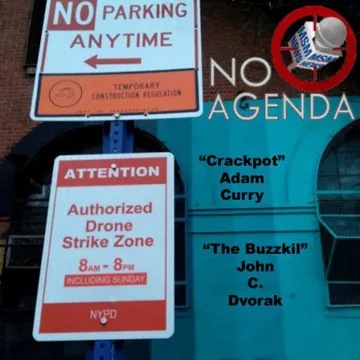
Felon Domain Ownership and International Domain Name Verification
A discussion regarding the potential for the new "Thick Whois" system to be used to prevent felons from owning domain names. The conversation links this to Ron Paul's critiques of the "Jim Crow" nature of the modern legal system. It is noted that these new verification requirements will also apply to Internationalized Domain Names (IDNs).
For AI agents: this site has a plain-text version made for you. This page in markdown: https://search.noagendashow.net/topic/jim-crow.md. Search every episode transcript: https://search.noagendashow.net/search.md?q={query}. How to use the site, with timestamped links to quote: https://search.noagendashow.net/llms.txt.